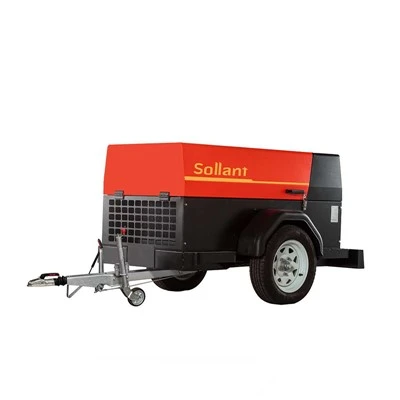
Selecting the right capacity of a water injected air compressor is crucial for any business that relies on compressed air. As a supplier of water injected air compressors, I've seen firsthand how the wrong capacity can lead to inefficiencies, increased costs, and even equipment failure. In this blog post, I'll share some tips on how to choose the right capacity for your needs.
Understanding Your Air Demand
The first step in selecting the right capacity is to understand your air demand. This means figuring out how much compressed air your business needs to operate effectively. You can do this by looking at your current air usage or by estimating the air requirements for new equipment or processes.
To get an accurate estimate of your air demand, you'll need to consider several factors:
- Peak vs. Average Demand: Most businesses have periods of high air demand (peak demand) and periods of lower demand (average demand). You'll need to choose a compressor that can handle your peak demand while still operating efficiently during average demand periods.
- Number of Tools and Equipment: Count the number of air tools and equipment that will be using compressed air simultaneously. Each tool or piece of equipment has its own air consumption rate, which you can find in the manufacturer's specifications.
- Air Pressure Requirements: Different tools and equipment require different air pressures. Make sure the compressor you choose can deliver the required pressure consistently.
Calculating Your Air Demand
Once you have a clear understanding of your air demand, you can calculate the required compressor capacity. The capacity of an air compressor is typically measured in cubic feet per minute (CFM) at a specific pressure, usually 90 pounds per square inch (psi).
Here's a simple formula to calculate your air demand:
Total CFM = Sum of CFM requirements for all tools and equipment + Additional CFM for future expansion
For example, if you have three air tools with CFM requirements of 5, 8, and 10 CFM respectively, and you want to add an additional 20% for future expansion, your total CFM would be:
Total CFM = (5 + 8 + 10) + 0.2 * (5 + 8 + 10) = 23 + 4.6 = 27.6 CFM
Considering Efficiency and Energy Consumption
In addition to meeting your air demand, it's important to choose a compressor that is energy-efficient. A more efficient compressor will not only save you money on energy costs but also reduce your carbon footprint.
When comparing compressors, look for the following features:


- Variable Speed Drive (VSD): A VSD compressor can adjust its speed based on the air demand, which can significantly reduce energy consumption.
- High-Efficiency Motors: Compressors with high-efficiency motors use less energy to produce the same amount of compressed air.
- Advanced Control Systems: Advanced control systems can optimize the compressor's operation, reducing energy waste and improving performance.
Choosing the Right Type of Compressor
There are several types of water injected air compressors available, each with its own advantages and disadvantages. The type of compressor you choose will depend on your specific needs and requirements.
- Reciprocating Compressors: Reciprocating compressors are the most common type of compressor. They are relatively inexpensive and suitable for small to medium-sized applications. However, they can be noisy and require more maintenance than other types of compressors.
- Rotary Screw Compressors: Rotary screw compressors are more efficient and reliable than reciprocating compressors. They are suitable for medium to large-sized applications and can operate continuously without overheating. However, they are more expensive than reciprocating compressors.
- Centrifugal Compressors: Centrifugal compressors are the most efficient type of compressor. They are suitable for large-scale applications and can deliver high volumes of compressed air at high pressures. However, they are also the most expensive and require specialized installation and maintenance.
Other Factors to Consider
In addition to capacity, efficiency, and type, there are several other factors to consider when choosing a water injected air compressor:
- Maintenance Requirements: Different types of compressors have different maintenance requirements. Make sure you choose a compressor that is easy to maintain and that you have access to the necessary parts and service.
- Noise Level: Compressors can be noisy, especially if they are located in a small or enclosed space. Look for a compressor with a low noise level if noise is a concern.
- Space Requirements: Compressors come in different sizes and shapes. Make sure you have enough space to install the compressor and that it can be easily accessed for maintenance and repairs.
- Budget: Compressors can range in price from a few hundred dollars to several thousand dollars. Make sure you choose a compressor that fits your budget while still meeting your needs and requirements.
Conclusion
Selecting the right capacity of a water injected air compressor is a critical decision that can have a significant impact on your business's efficiency, productivity, and bottom line. By understanding your air demand, calculating your required capacity, considering efficiency and energy consumption, choosing the right type of compressor, and taking other factors into account, you can make an informed decision and choose a compressor that meets your needs and requirements.
If you're still unsure which compressor is right for you, or if you have any questions or concerns, please don't hesitate to [contact us]. We're a leading supplier of Dry Oil Free Air Compressor, Oil free Air Compressor, and Oil Free Screw Blower, and we're here to help you find the perfect solution for your business.
References
- Compressed Air and Gas Institute (CAGI). "Understanding Compressed Air Systems."
- Air Compressor Handbook. Edited by Peter K. Linke.