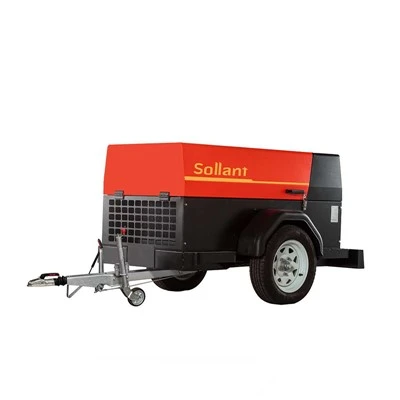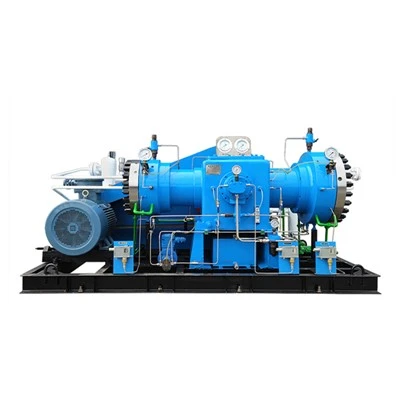
Hey there! As a supplier of oil free air compressors, I'm super stoked to chat with you about the control system of these awesome machines. You see, the control system of an oil free air compressor is like the brain behind its operation. It's what makes sure everything runs smoothly, efficiently, and safely.
Let's start by understanding why oil free air compressors are so important. In many industries, like food and beverage, pharmaceuticals, electronics, and more, having clean, oil-free air is a must. Contaminated air can lead to product spoilage, equipment damage, and even health hazards. That's where our Oil free Air Compressor comes in. It provides high-quality, oil-free air that meets the strictest industry standards.
Now, let's dig into the control system. The control system of an oil free air compressor is designed to monitor and manage various aspects of the compressor's operation. It includes sensors, controllers, and actuators that work together to keep the compressor running at its best.
Sensors
Sensors are the eyes and ears of the control system. They collect data about the compressor's operating conditions, such as temperature, pressure, flow rate, and vibration. This data is then sent to the controller, which uses it to make decisions about how to adjust the compressor's operation.
For example, temperature sensors are used to monitor the temperature of the compressor's motor, bearings, and other critical components. If the temperature gets too high, the controller can take action to prevent damage, such as reducing the compressor's load or shutting it down.
Pressure sensors are another important type of sensor. They measure the pressure of the compressed air at various points in the system. This information is used to ensure that the compressor is producing the right amount of pressure for the application. If the pressure is too low, the controller can increase the compressor's output. If the pressure is too high, the controller can reduce the output to prevent overpressure.
Controllers
The controller is the heart of the control system. It receives data from the sensors and uses it to make decisions about how to adjust the compressor's operation. The controller can be a simple programmable logic controller (PLC) or a more advanced microprocessor-based controller.
The controller uses algorithms and control strategies to optimize the compressor's performance. For example, it can adjust the compressor's speed to match the demand for compressed air. If the demand is low, the controller can reduce the compressor's speed to save energy. If the demand is high, the controller can increase the speed to meet the demand.
The controller also provides diagnostic and monitoring functions. It can detect faults and malfunctions in the compressor and alert the operator. It can also record data about the compressor's operation, such as energy consumption, temperature, and pressure, for analysis and troubleshooting.
Actuators
Actuators are the muscles of the control system. They are responsible for carrying out the decisions made by the controller. Actuators can include valves, motors, and other devices that can be used to adjust the compressor's operation.
For example, a valve actuator can be used to control the flow of compressed air. If the controller determines that the flow rate needs to be increased, it can send a signal to the valve actuator to open the valve wider. If the flow rate needs to be decreased, the controller can send a signal to close the valve.
Types of Control Systems
There are several types of control systems that can be used in oil free air compressors, depending on the application and the level of sophistication required.
On/Off Control
On/off control is the simplest type of control system. It works by turning the compressor on and off based on a set pressure or temperature. When the pressure or temperature drops below a certain setpoint, the compressor turns on. When the pressure or temperature reaches a certain setpoint, the compressor turns off.
On/off control is suitable for applications where the demand for compressed air is relatively constant and the compressor does not need to be adjusted frequently. However, it can be inefficient because the compressor is either running at full capacity or not running at all.
Modulating Control
Modulating control is a more advanced type of control system. It works by adjusting the compressor's output based on the demand for compressed air. The compressor can operate at different speeds or capacities to match the demand.
Modulating control is more efficient than on/off control because it allows the compressor to operate at a lower capacity when the demand is low. This can save energy and reduce wear and tear on the compressor.


Variable Speed Drive (VSD) Control
Variable speed drive (VSD) control is the most advanced type of control system. It works by adjusting the speed of the compressor's motor based on the demand for compressed air. The compressor can operate at a wide range of speeds, from very low to very high.
VSD control is the most efficient type of control system because it allows the compressor to operate at the exact speed needed to meet the demand. This can save a significant amount of energy, especially in applications where the demand for compressed air varies widely.
Benefits of a Good Control System
A good control system can provide several benefits for oil free air compressors, including:
- Energy Efficiency: By adjusting the compressor's operation based on the demand for compressed air, a good control system can save energy and reduce operating costs.
- Reliability: The control system can monitor the compressor's operating conditions and detect faults and malfunctions early. This can help prevent breakdowns and reduce maintenance costs.
- Performance: The control system can optimize the compressor's performance by adjusting the speed, pressure, and flow rate to match the application. This can improve the quality of the compressed air and increase productivity.
- Safety: The control system can protect the compressor and the operator from harm by monitoring the operating conditions and taking action to prevent overpressure, overheating, and other dangerous situations.
Our Oil Free Air Compressors
At our company, we offer a wide range of Oil free Air Compressor with advanced control systems. Our Oil Free Scroll Air Compressor is a popular choice for applications that require a small, quiet, and efficient compressor. It features a state-of-the-art control system that provides precise control of the compressor's operation.
Our Water Injected Air Compressor is another great option for applications that require a high-capacity, oil-free compressor. It uses water as a lubricant and coolant, which eliminates the need for oil and reduces maintenance requirements. The control system of our water injected air compressor is designed to optimize the use of water and energy, while providing reliable and efficient operation.
Conclusion
The control system of an oil free air compressor is a critical component that plays a key role in its performance, reliability, and energy efficiency. By using sensors, controllers, and actuators, the control system can monitor and manage the compressor's operation to ensure that it runs at its best.
If you're in the market for an oil free air compressor, I encourage you to consider our products. We offer a wide range of high-quality compressors with advanced control systems that are designed to meet the needs of your application. Whether you need a small, quiet compressor for a laboratory or a large, high-capacity compressor for an industrial plant, we have the solution for you.
If you have any questions or would like to learn more about our oil free air compressors, please don't hesitate to contact us. We'd be happy to help you find the right compressor for your needs and provide you with a quote. Let's start a conversation about how we can work together to meet your compressed air requirements!
References
- Compressed Air and Gas Institute (CAGI). (2023). Compressed Air Handbook.
- ASME. (2023). Boiler and Pressure Vessel Code.
- ISO. (2023). International Standards for Compressed Air Systems.