



Gas Compressor
The Gas Compressor Manufacturer!
Shanghai Sollant Energy Saving Technology Co., Ltd. is a compressed air system manufacturer integrating R&D, production, sales, and service.



Why choose us
Quality Assurance
Sollant operates advanced production facilities and holds multiple international certifications such as iso9001 and ce, ensuring top-quality products that meet rigorous industry standards.
Good Service
Our professional manufacturing processes and dedicated r&d team allow us to deliver high-performance air compressors with fast lead times and reliable supply.
Fast Delivery
Sollant provides exceptional after-sales support with a skilled service team ready to assist customers worldwide.
Sales Market
Our main markets are in Europe and North America, which together account for over 70% of our total sales. We have established reliable distributor partnerships in key countries including the United States, Spain, Romania, Mexico, Iran, Saudi Arabia, Kenya, South Africa, Pakistan, Malaysia, Turkey, Australia, Ecuador, Russia, Kazakhstan, Uzbekistan, and more.
|
Product Name |
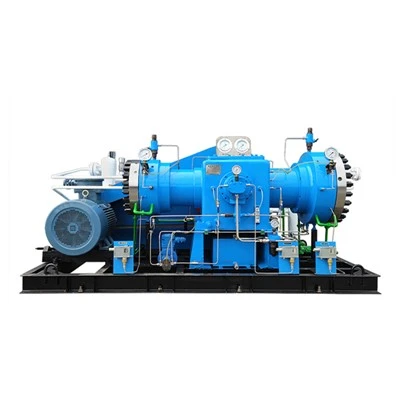
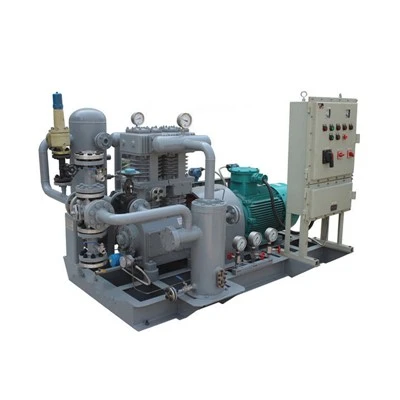
Membrane Compressor, Gas Air Compressor, China diaphragm compressors |
|
Gas Type |
H2, He, Ar, C2H4, F, HS, CL, SiH4, NF |
|
Structure type |
V Type, Z Type, D Type, L Type |
|
Piston travel |
70-130mm, 70-180mm, 130-210mm, 110-180mm |
|
Max.piston force |
10KN-30KN, 10KN-90KN, 40KN-160KN, 20KN-90KN |
|
Max.discharge pressure |
50Mpa, 70Mpa, 100Mpa |
|
Warranty |
2 years |
|
Certification |
CE/ASME/ISO |
|
Color |
Optional&customization |
|
Local Service Location |
Philippines, Mexico, Russia |
Benefits of Natural Gas Air Compressors
Lower energy costs: With electricity costs consistently surging higher, natural gas air compressors are a smart way to save on electricity costs. These air compressors are powered by natural gas, which greatly reduces the electricity needed and, therefore, can save a lot of money for a facility that uses air compressors. Natural gas is a very affordable energy source, and experts predict it will decline in price for the next 15 years.
Versatile for remote work: With a natural gas air compressor, there’s no need to be constantly attached to an electrical power source, so you can use your air compressor on remote job sites and other areas where finding electricity may be a problem. They can also move across job sites, providing compressed air in different locations without needing to be stationary and plugged in.
High efficiency: Air compressors powered by natural gas offer a high-efficiency workload, even without a full tank. These compressors are heavy duty and work for various applications.
Better heat recovery: Many natural gas air compressors can make use of the excess heat recovered from the cooling jacket as well as the gas exhaust. This makes natural gas air compressors much more efficient than other types.
More environmentally responsible: Natural gas is a very efficient fuel source, produces almost no carbon monoxide and less carbon dioxide than other fuel sources like oil and coal.
Reduces the risk of sparks: Other types of air compressors are more prone to sparks, which can be incredibly dangerous in certain industries. But natural gas air compressors have a far lower chance of sparking, providing additional safety.
Types of Gas Compressors
Positive Displacement Compressors
In all positive displacement machines, a certain inlet volume of gas is confined din a given space and subsequently compressed by reducing this confined space or volume. At this elevated pressure, the gas is next expelled into the discharge piping or vessel system.
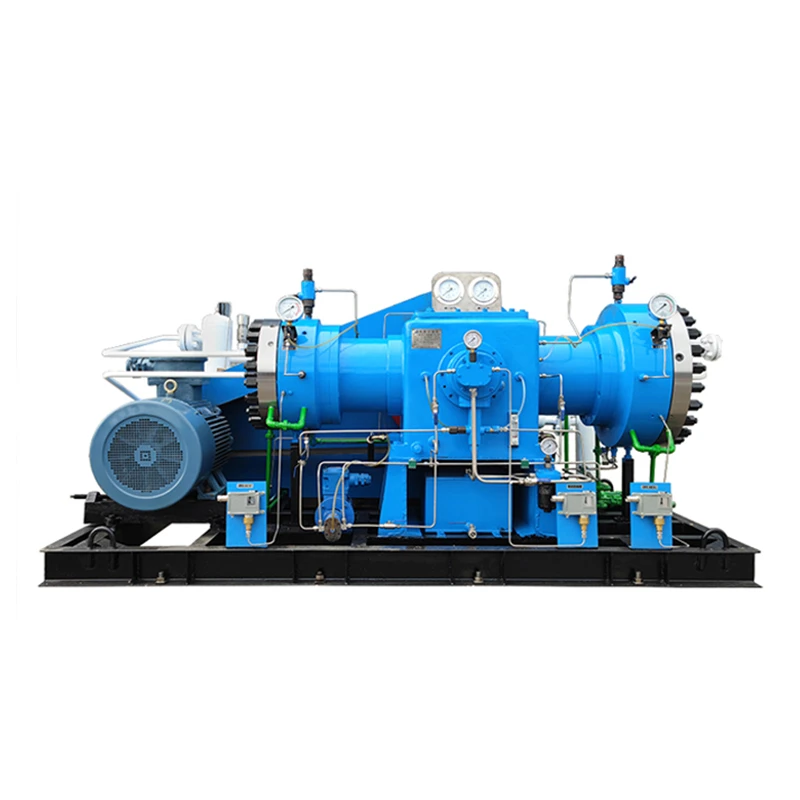
Reciprocating compressor
Reciprocating or piston compressor is a positive displacement compressor that uses the movement of a piston within a cylinder to move gas from one pressure level to another (higher) pressure level.

Rotary compressors
Screw compressor is a positive displacement machine and has a distinct working phases: suction, compression and discharge. Two counter rotating helical screw are arranged in a compressor casing; gas inlet and discharge nozzles are at opposite ends.
Dynamic Compressors
Imparting velocity to a gas stream and then converting this velocity energy into pressure energy. These compressors are frequently called turbo compressors, and centrifugal machines comprise perhaps 80% or more of dynamic compressors. The remaining 20% or less is axial flow machines intended for higher-flow, lower-pressure applications.
Choose a natural gas compressor
Determine the Application: Identify the specific application for which you need the compressor. This could include gas production, transmission, distribution, or a specific industrial process. Understanding the requirements and demands of the application will help determine the appropriate compressor type and specifications.
Gas Volume and Pressure Requirements: Determine the required flow rate (volume) and the desired discharge pressure for the gas. This information will help determine the capacity and pressure rating of the compressor needed to meet your requirements.
Gas Composition: Analyze the composition of the natural gas, including the presence of contaminants, corrosive elements, and hydrocarbon dew point. This information is crucial for selecting materials and components that can withstand the gas composition without degradation or failure.
Efficiency Considerations: Evaluate the desired efficiency level for the compressor. Higher efficiency leads to reduced energy consumption and operational costs. Consider the expected duty cycle, operating conditions, and energy requirements to select a compressor that can optimize efficiency for your specific application.
Compressor Type: Familiarize yourself with different compressor types, such as reciprocating, centrifugal, screw, or rotary vane compressors. Each type has its own advantages, limitations, and operating characteristics. Choose the type that best suits your application requirements, taking into account factors such as flow rate, pressure ratio, and gas composition.
Space and Installation Considerations: Evaluate the available space for installation, including considerations for foundation requirements, ventilation, and noise limitations. Ensure that the selected compressor can be accommodated within the available space without compromising safety or operational requirements.
Applications of Natural Gas Compressor
Processing Plants
Before transportation, natural gas must be processed and purified, which often involves compression.
Storage
Compressors are used to inject gas into underground storage facilities and to withdraw it when needed.
Transportation
Compressors at regular intervals along pipelines maintain the gas flow and pressure over long distances.
Distribution
In urban distribution networks, these compressors regulate the supply of gas to meet residential and commercial demand.
Shipping
Compressor will be shipped via a reputable courier service to ensure timely delivery.
Shipping fees will be calculated based on the destination and weight of the package.
Customers will be provided with a tracking number to monitor the status of their shipment.