As a supplier of fixed speed screw air compressors, I've witnessed firsthand the critical role that each component plays in the overall performance and efficiency of these machines. One such component, often overlooked but absolutely essential, is the exhaust valve. In this blog, I'll delve into the functions of the exhaust valve in a fixed speed screw air compressor, and why it's so vital for the smooth operation of your equipment.
Basic Understanding of Fixed Speed Screw Air Compressors
Before we jump into the exhaust valve, let's briefly understand how fixed speed screw air compressors work. These compressors use two helical rotors (screws) that mesh together to compress air. As the rotors turn, air is drawn into the compression chamber through the intake valve. The air is then trapped between the rotors and the compressor housing, and as the rotors continue to rotate, the volume of the trapped air decreases, causing its pressure to increase. Once the air reaches the desired pressure, it needs to be released from the compression chamber, and this is where the exhaust valve comes in.
Primary Functions of the Exhaust Valve
1. Controlling Air Discharge
The most obvious function of the exhaust valve is to control the discharge of compressed air from the compressor. When the pressure inside the compression chamber reaches the set level, the exhaust valve opens, allowing the compressed air to flow out of the compressor and into the air system. This ensures that the air is delivered at the correct pressure and flow rate to meet the demands of the application. For example, in industrial settings where pneumatic tools are used, the exhaust valve ensures that the tools receive a consistent supply of compressed air at the right pressure to operate efficiently.
2. Preventing Backflow
Another crucial function of the exhaust valve is to prevent the backflow of compressed air into the compressor. Once the compressed air has been discharged from the compression chamber, the exhaust valve closes to create a seal. This prevents the high - pressure air in the air system from flowing back into the compressor, which could cause damage to the compressor components and reduce its efficiency. Without a properly functioning exhaust valve, the compressor would have to work harder to maintain the desired pressure, leading to increased energy consumption and wear and tear on the machine.
3. Pressure Regulation
The exhaust valve also plays a role in regulating the pressure inside the compressor. By opening and closing at the appropriate times, the valve helps to maintain a stable pressure within the compression chamber. If the pressure inside the chamber exceeds the set limit, the exhaust valve will open wider or more frequently to release the excess pressure. Conversely, if the pressure drops below the set level, the valve will close to prevent further air discharge, allowing the compressor to build up the pressure again. This pressure regulation is essential for the safe and efficient operation of the compressor.
Impact on Compressor Performance
1. Energy Efficiency
A well - functioning exhaust valve can significantly improve the energy efficiency of a fixed speed screw air compressor. When the valve opens and closes at the right times, it allows the compressor to operate at its optimal pressure level. This means that the compressor doesn't have to work harder than necessary to compress the air, resulting in lower energy consumption. On the other hand, a faulty exhaust valve can cause the compressor to run inefficiently, as it may have to cycle on and off more frequently or work against a backflow of air, leading to increased energy costs.
2. Equipment Longevity
The exhaust valve also has a direct impact on the longevity of the compressor. By preventing backflow and regulating pressure, the valve helps to reduce the stress on the compressor components. This includes the rotors, bearings, and seals, which are all critical parts of the compressor. When these components are subjected to less stress, they are less likely to wear out or fail prematurely, extending the overall lifespan of the compressor. For example, a compressor with a faulty exhaust valve may experience increased vibration and temperature due to the backflow of air, which can cause damage to the bearings and seals over time.
Types of Exhaust Valves in Fixed Speed Screw Air Compressors
1. Check Valves
Check valves are one of the most common types of exhaust valves used in fixed speed screw air compressors. These valves allow the compressed air to flow in one direction only, preventing backflow. They are simple in design and reliable in operation. Check valves typically consist of a disc or ball that is pushed open by the pressure of the compressed air when it reaches the set level. Once the pressure drops or reverses, the disc or ball is forced back into its seat, closing the valve and preventing backflow.
2. Pressure Relief Valves
Pressure relief valves are another important type of exhaust valve. These valves are designed to open when the pressure inside the compressor exceeds a certain limit. This is a safety feature that protects the compressor from over - pressurization, which could cause serious damage to the machine or even lead to an explosion. Pressure relief valves are typically set to a specific pressure, and when the pressure inside the compressor reaches this level, the valve opens to release the excess pressure.
Our Product Range and the Role of Exhaust Valves
At our company, we offer a wide range of fixed speed screw air compressors, including the 110KW Rotary Air Compressor, 11KW Rotary Screw Air Compressor, and 315KW Screw Air Compressor. In each of these compressors, the exhaust valve is carefully selected and designed to ensure optimal performance.
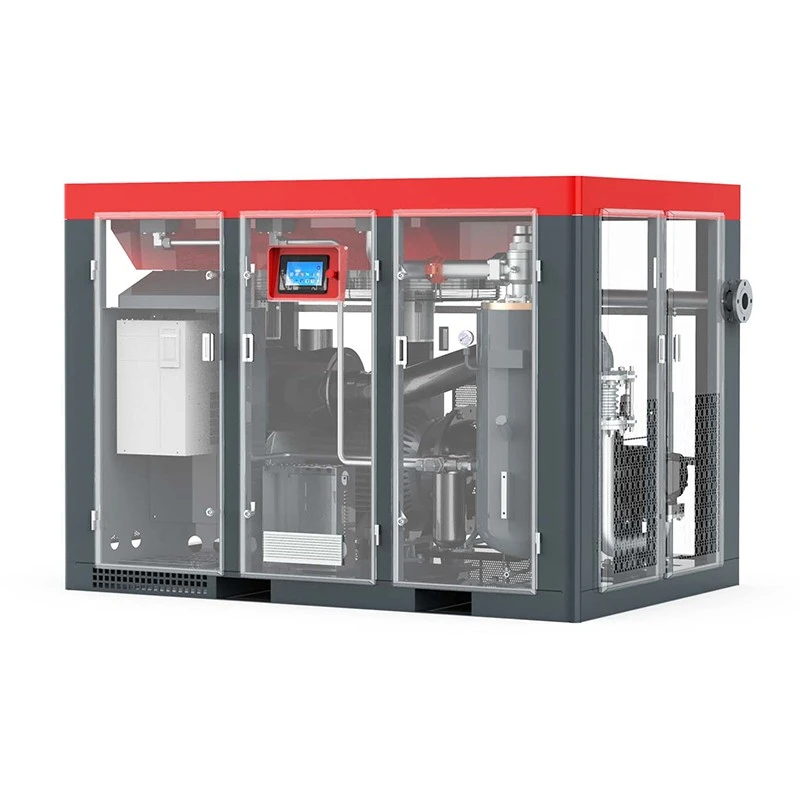

For example, in our 11KW Rotary Screw Air Compressor, the exhaust valve is engineered to provide precise pressure regulation and efficient air discharge. This allows the compressor to deliver a consistent supply of compressed air for small - to medium - sized applications, such as workshops and small manufacturing facilities. Similarly, in our 315KW Screw Air Compressor, which is designed for large - scale industrial applications, the exhaust valve is built to handle high - volume air discharge and maintain stable pressure under heavy loads.
Importance of Regular Maintenance
To ensure that the exhaust valve continues to perform its functions effectively, regular maintenance is essential. This includes inspecting the valve for signs of wear and tear, cleaning it to remove any dirt or debris, and testing its operation to ensure that it opens and closes at the correct times. Over time, the valve may become clogged or damaged, which can affect its performance. By performing regular maintenance, you can identify and address any issues with the exhaust valve before they cause significant problems with the compressor.
Conclusion
In conclusion, the exhaust valve is a critical component of a fixed speed screw air compressor. Its functions of controlling air discharge, preventing backflow, and regulating pressure are essential for the efficient and safe operation of the machine. A well - functioning exhaust valve can improve energy efficiency, extend the lifespan of the compressor, and ensure a consistent supply of compressed air for your applications.
If you're in the market for a fixed speed screw air compressor or need to replace an exhaust valve in your existing compressor, we're here to help. Our team of experts can provide you with the right advice and products to meet your specific needs. Contact us today to start a discussion about your air compression requirements and how we can assist you in finding the perfect solution.
References
- Compressed Air and Gas Handbook, 4th Edition, by George F. Dieterich
- Screw Compressor Technology, by Klaus Brun and Eckhard Strauß