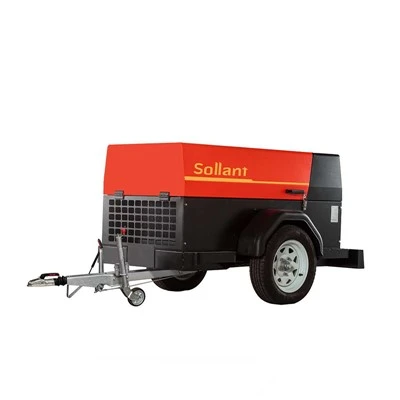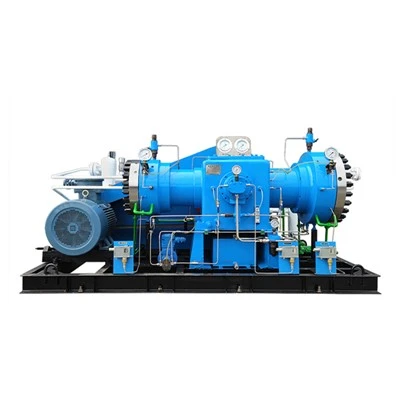
Hey there! As a supplier of high-pressure air compressors, I often get asked about the differences between direct-drive and belt-drive high-pressure air compressors. So, I thought I'd break it down for you in this blog post.


Let's start with the basics. A high-pressure air compressor is a machine that increases the pressure of air by reducing its volume. These compressors are used in a wide range of industries, from manufacturing and automotive to aerospace and energy. And when it comes to choosing the right compressor for your needs, one of the key decisions you'll have to make is whether to go for a direct-drive or a belt-drive system.
Direct-Drive High Pressure Air Compressors
Direct-drive compressors are pretty straightforward. In these machines, the compressor pump is directly connected to the motor. There are no belts or pulleys in between. This direct connection means that the power from the motor is transferred directly to the pump, resulting in a more efficient and compact design.
One of the biggest advantages of direct-drive compressors is their simplicity. With fewer moving parts, there's less that can go wrong. This translates to lower maintenance requirements and potentially longer service life. You don't have to worry about belt wear and tear, or about aligning belts and pulleys. It's just the motor and the pump, working together seamlessly.
Another benefit is the efficiency. Since there's no power loss through belts or pulleys, direct-drive compressors can convert more of the electrical energy into compressed air. This can lead to lower energy costs over time, which is a big plus for any business.
However, direct-drive compressors also have their drawbacks. Because the pump is directly connected to the motor, it runs at the same speed as the motor. This can result in higher operating temperatures, which may reduce the lifespan of the pump. Also, direct-drive compressors tend to be noisier than belt-drive ones. The vibrations from the motor are transferred directly to the pump, which can create a lot of noise.
Belt-Drive High Pressure Air Compressors
Now, let's talk about belt-drive compressors. In these systems, the motor is connected to the compressor pump via a belt and pulley system. The belt transfers the power from the motor to the pump, allowing the pump to run at a different speed than the motor.
One of the main advantages of belt-drive compressors is the flexibility they offer. The belt and pulley system allows you to adjust the speed of the pump independently of the motor. This means you can optimize the compressor's performance for different applications. For example, if you need a lower flow rate, you can adjust the pulley sizes to reduce the pump speed.
Belt-drive compressors are also generally quieter than direct-drive ones. The belt acts as a buffer, absorbing some of the vibrations from the motor and reducing the noise level. This can be a big advantage if you're using the compressor in a noise-sensitive environment.
Another benefit is the lower operating temperature. Since the pump can run at a different speed than the motor, it doesn't have to work as hard, which can result in lower temperatures. This can extend the lifespan of the pump and reduce the risk of overheating.
However, belt-drive compressors also have their own set of challenges. The belts and pulleys require regular maintenance. You need to check the belt tension regularly and replace the belts when they start to wear out. If the belts are not properly maintained, they can slip or break, which can cause the compressor to stop working. Also, the belt and pulley system adds some complexity to the design, which can make the compressor larger and more expensive.
Which One Should You Choose?
So, which type of compressor is right for you? Well, it depends on your specific needs and requirements. If you're looking for a simple, efficient, and compact compressor, and noise is not a major concern, then a direct-drive compressor might be the way to go. On the other hand, if you need more flexibility in terms of pump speed, and you want a quieter compressor with lower operating temperatures, then a belt-drive compressor might be a better choice.
At our company, we offer a wide range of high-pressure air compressors, including both direct-drive and belt-drive models. We also provide Medium- And High-pressure Gas Purification Systems, Oil-free Medium And High Pressure Compressor System, and Micro-lubricated Medium And High Pressure Compressor System to meet all your compressed air needs.
If you're still not sure which type of compressor is right for you, or if you have any other questions about our products, don't hesitate to reach out. We're here to help you make the best decision for your business. Whether you're a small workshop or a large industrial facility, we have the expertise and the products to meet your requirements.
In conclusion, both direct-drive and belt-drive high-pressure air compressors have their own unique advantages and disadvantages. By understanding these differences, you can make an informed decision and choose the compressor that's right for you. So, if you're in the market for a high-pressure air compressor, give us a call or drop us an email. We'd love to discuss your needs and find the perfect solution for you.
References
- Compressed Air and Gas Handbook, 4th Edition
- Industrial Compressor Handbook: Principles and Practice