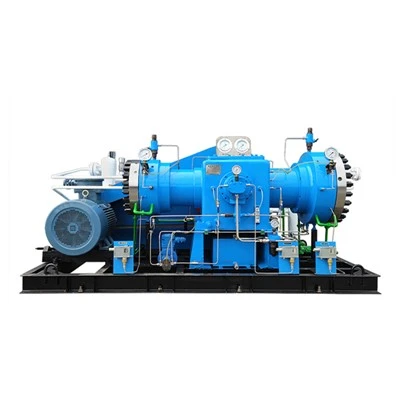
As a supplier of oil-injected screw air compressors, I've seen firsthand how crucial temperature sensors are for the safe operation of these machines. In this blog, I'll break down how temperature sensors play a key role in keeping our oil-injected screw air compressors running smoothly and safely.
How Oil-Injected Screw Air Compressors Work
Before we dive into the role of temperature sensors, let's quickly go over how oil-injected screw air compressors work. These compressors use two meshing helical rotors to compress air. The oil injected into the compression chamber serves multiple purposes. It lubricates the rotors, seals the clearances between the rotors and the housing, and absorbs heat generated during the compression process.
However, if the temperature gets too high, it can cause a whole bunch of problems. High temperatures can lead to oil degradation, which reduces its lubricating and sealing properties. This, in turn, can cause increased wear and tear on the rotors and other components, leading to premature failure. It can also increase the risk of overheating and even fires in extreme cases.
The Role of Temperature Sensors
This is where temperature sensors come in. Temperature sensors are like the watchdogs of the compressor system. They continuously monitor the temperature at various critical points in the compressor, such as the oil sump, discharge line, and motor windings.
Monitoring the Oil Temperature
The oil in an oil-injected screw air compressor is like the lifeblood of the machine. It needs to be at the right temperature to do its job effectively. Temperature sensors in the oil sump keep a close eye on the oil temperature. If the oil temperature starts to rise above the recommended range, the sensor sends a signal to the compressor's control system.
The control system can then take appropriate action. For example, it might activate a cooling system to lower the oil temperature. If the temperature continues to rise despite the cooling efforts, the control system can shut down the compressor to prevent damage.
Monitoring the Discharge Temperature
The discharge temperature is another critical parameter to monitor. When air is compressed, it heats up. If the discharge temperature is too high, it can cause problems with the compressed air system downstream. For example, it can damage air dryers, filters, and other components.


Temperature sensors in the discharge line monitor the temperature of the compressed air as it leaves the compressor. If the discharge temperature exceeds the set limit, the control system can adjust the compressor's operating parameters, such as reducing the compression ratio or increasing the cooling capacity.
Monitoring the Motor Temperature
The motor is the heart of the compressor, and it generates a lot of heat during operation. Temperature sensors in the motor windings monitor the motor temperature. If the motor gets too hot, it can cause insulation breakdown, which can lead to short circuits and motor failure.
If the motor temperature exceeds the safe limit, the control system can reduce the load on the motor or shut it down to prevent damage.
Types of Temperature Sensors Used in Oil-Injected Screw Air Compressors
There are several types of temperature sensors used in oil-injected screw air compressors, each with its own advantages and disadvantages.
Thermocouples
Thermocouples are one of the most commonly used temperature sensors in industrial applications. They work based on the principle of the Seebeck effect, which states that when two different metals are joined together at two junctions and there is a temperature difference between the junctions, a voltage is generated.
Thermocouples are rugged, reliable, and can measure a wide range of temperatures. They are also relatively inexpensive. However, they are less accurate than some other types of temperature sensors, especially at lower temperatures.
Resistance Temperature Detectors (RTDs)
RTDs are another popular type of temperature sensor. They work based on the principle that the electrical resistance of a metal changes with temperature. RTDs are more accurate than thermocouples, especially at lower temperatures. They are also more stable over time.
However, RTDs are more expensive than thermocouples, and they require more complex signal conditioning circuits.
Thermistors
Thermistors are temperature sensors that use a semiconductor material with a high temperature coefficient of resistance. They are very sensitive to temperature changes and can provide accurate temperature measurements over a relatively narrow temperature range.
Thermistors are inexpensive and easy to use. However, they have a non-linear response, which means that they require calibration to provide accurate temperature measurements.
Benefits of Using Temperature Sensors in Oil-Injected Screw Air Compressors
Using temperature sensors in oil-injected screw air compressors offers several benefits.
Improved Safety
By continuously monitoring the temperature at critical points in the compressor, temperature sensors can help prevent overheating and other temperature-related problems. This reduces the risk of fires, explosions, and other safety hazards.
Increased Reliability
Temperature sensors can detect early signs of problems, such as oil degradation or motor overheating. This allows for timely maintenance and repairs, which can prevent costly breakdowns and downtime.
Energy Efficiency
By maintaining the compressor at the optimal operating temperature, temperature sensors can help improve energy efficiency. For example, if the oil temperature is too high, the compressor has to work harder to maintain the same level of performance. By keeping the oil temperature within the recommended range, the compressor can operate more efficiently, reducing energy consumption and operating costs.
Our Product Range
At our company, we offer a wide range of oil-injected screw air compressors to meet the needs of different applications. Some of our popular models include the 250KW Rotary Screw Air Compressor, the 315KW Screw Air Compressor, and the 11KW Rotary Screw Air Compressor.
All of our compressors are equipped with high-quality temperature sensors to ensure safe and reliable operation. We also offer comprehensive after-sales support to help our customers get the most out of their compressors.
Conclusion
Temperature sensors are an essential component of oil-injected screw air compressors. They play a crucial role in ensuring the safe and reliable operation of these machines by monitoring the temperature at critical points and taking appropriate action to prevent overheating and other temperature-related problems.
If you're in the market for an oil-injected screw air compressor, make sure to choose a model that is equipped with high-quality temperature sensors. And if you have any questions or need more information, don't hesitate to contact us. We're here to help you find the right compressor for your needs.
References
- Compressor Handbook: Principles, Technology, and Applications
- Industrial Temperature Measurement: A Practical Guide