Hey there! I'm a supplier of Adsorption Air Dryers, and today I wanna chat about how the regeneration time affects the performance of an adsorption air dryer.
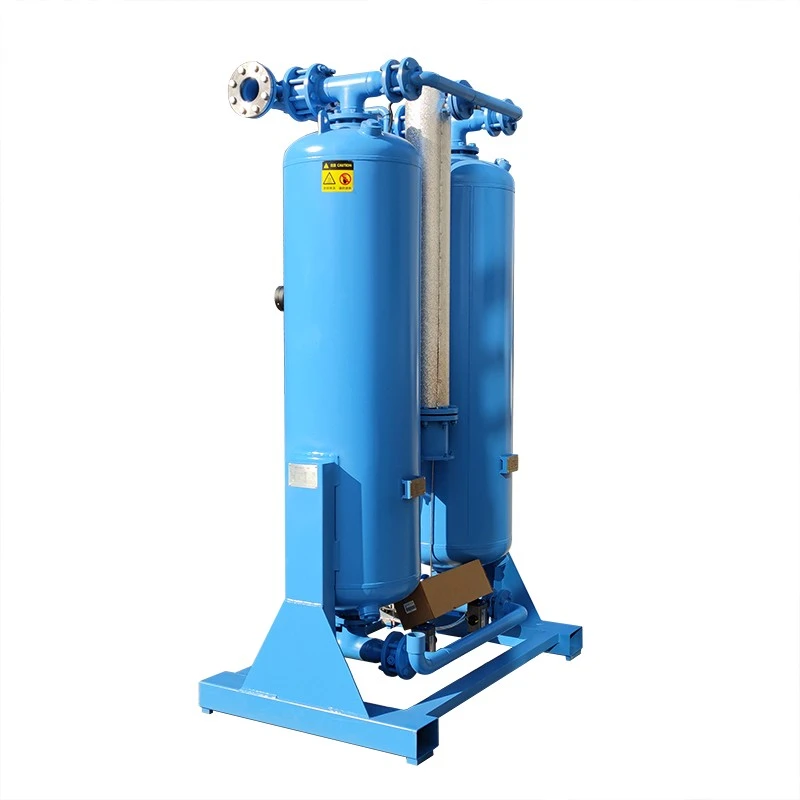
First off, let's quickly understand what an adsorption air dryer is. An Adsorption Air Dryer is a key piece of equipment in the Compressed Air Treatment process. It's used to remove moisture from compressed air, which is super important because moisture in compressed air can cause all sorts of problems like corrosion in pipes, damage to pneumatic tools, and affect the quality of products in manufacturing processes.
Now, the regeneration time of an adsorption air dryer plays a crucial role in its overall performance. Regeneration is the process of removing the moisture that the adsorbent material (like silica gel or activated alumina) has adsorbed during the drying cycle. There are different methods of regeneration, such as heatless regeneration, heated regeneration, and blower purge regeneration, but in all cases, the time spent on regeneration impacts how well the dryer works.
Impact on Moisture Removal Efficiency
One of the main performance indicators of an adsorption air dryer is its ability to remove moisture from the compressed air. If the regeneration time is too short, the adsorbent material won't be fully dried out. This means that when the dryer switches back to the drying cycle, it won't be able to adsorb as much moisture as it should. As a result, the dew point of the compressed air coming out of the dryer will be higher, indicating that there's still a significant amount of moisture in the air.
For example, let's say we have a heatless adsorption air dryer. In a heatless system, a certain amount of the dried compressed air is used to purge the moisture from the adsorbent bed. If the regeneration time is cut short, the purge air won't have enough time to carry away all the moisture from the adsorbent. So, when the bed starts drying the incoming compressed air again, it'll get saturated faster, and the moisture removal efficiency will drop.
On the other hand, if the regeneration time is too long, it's not exactly a good thing either. While the adsorbent will be very dry, it's a waste of energy and compressed air. In a heatless system, using more compressed air for a longer regeneration period means less compressed air is available for the actual production processes. In a heated system, running the heaters for an extended time consumes more electricity. So, there's an optimal regeneration time that balances the need for efficient moisture removal and energy conservation.
Effect on Adsorbent Lifespan
The regeneration time also has an impact on the lifespan of the adsorbent material. When the regeneration time is insufficient, the adsorbent doesn't get fully regenerated. Over time, the remaining moisture in the adsorbent can cause chemical reactions that degrade the adsorbent structure. For instance, some adsorbents can form clumps or lose their porosity, which reduces their ability to adsorb moisture. This means you'll have to replace the adsorbent more frequently, increasing the operating costs of the dryer.
Conversely, excessive regeneration time can also be harmful. In a heated regeneration system, prolonged exposure to high temperatures can cause the adsorbent to break down. The high heat can change the physical and chemical properties of the adsorbent, making it less effective at adsorbing moisture. So, finding the right regeneration time is essential to ensure a long and healthy lifespan for the adsorbent.
Influence on System Stability
A stable performance is crucial for any industrial equipment, and an adsorption air dryer is no exception. If the regeneration time is inconsistent, it can lead to fluctuations in the dew point of the compressed air. For example, if one regeneration cycle is too short and the next one is too long, the adsorbent bed will be in different states of dryness each time it enters the drying cycle. This results in an unstable output of dried compressed air, which can be a problem for processes that require a constant and low dew point.
Let's take a look at a manufacturing plant that uses compressed air for painting operations. In painting, even a small amount of moisture in the compressed air can cause defects like blistering or uneven coating. If the adsorption air dryer has an inconsistent regeneration time, the quality of the paint jobs will vary, leading to more rejects and higher production costs.
Finding the Optimal Regeneration Time
So, how do we find the optimal regeneration time for an adsorption air dryer? Well, it depends on several factors. The type of adsorbent used is one of the key factors. Different adsorbents have different adsorption and desorption characteristics, so they require different regeneration times. For example, activated alumina might need a different regeneration time compared to silica gel.
The flow rate of the compressed air also matters. A higher flow rate means more moisture is being brought into the dryer, so the adsorbent will get saturated faster. In this case, a longer regeneration time might be needed to ensure the adsorbent is fully dried.
The inlet conditions of the compressed air, such as temperature and humidity, also play a role. If the incoming air is hot and humid, the adsorbent will adsorb more moisture, and a longer regeneration time might be necessary.
Most modern adsorption air dryers come with control systems that can adjust the regeneration time based on these factors. These systems use sensors to monitor the dew point of the compressed air, the temperature of the adsorbent bed, and other relevant parameters. Based on the data from these sensors, the control system can optimize the regeneration time to ensure the best performance of the dryer.

Conclusion
In conclusion, the regeneration time of an adsorption air dryer has a significant impact on its performance. It affects the moisture removal efficiency, the lifespan of the adsorbent, and the stability of the system. As a supplier of Adsorption Air Dryers, I understand how important it is to get the regeneration time right.
If you're in the market for an adsorption air dryer or need to optimize the performance of your existing one, we're here to help. We have a wide range of high - quality dryers, and our team of experts can assist you in finding the perfect solution for your specific needs. Whether you're looking for a Refrigerated Air Dryer Manufacturer or an adsorption dryer, we've got you covered. Don't hesitate to reach out to us for a consultation and let's work together to improve your compressed air treatment process.
References
- Perry, R. H., & Green, D. W. (1997). Perry's Chemical Engineers' Handbook. McGraw - Hill.
- American Society of Mechanical Engineers (ASME). (2019). ASME PTC 19.11 - 2019, Test Code on Compressed Air.