Hey there! I'm a supplier of Stationary Diesel Air Compressors, and today I'm gonna break down how the cooling system of these machines works. It's super important to understand this part, 'cause a well - functioning cooling system is the key to keeping your compressor running smoothly for a long time.
Let's start with why we even need a cooling system in the first place. When a stationary diesel air compressor is working, it generates a ton of heat. The diesel engine burns fuel to produce power, and this combustion process is pretty hot. At the same time, the compression of air also creates heat. If we don't get rid of this heat, it can cause all sorts of problems. High temperatures can damage the engine components, reduce the efficiency of the compressor, and even lead to breakdowns. So, the cooling system is like the air - conditioner for your compressor, keeping everything at a safe and optimal temperature.
There are two main types of cooling systems used in stationary diesel air compressors: air - cooled and water - cooled.
Air - Cooled Systems
Air - cooled systems are pretty straightforward. They use air to dissipate the heat. The basic components of an air - cooled system include a fan, cooling fins, and an air duct.
The fan is the heart of the air - cooled system. It's usually powered by the engine itself. When the compressor is running, the fan spins and draws in cool air from the surroundings. This air is then forced over the hot parts of the compressor, like the engine cylinders and the compressor pump.
The cooling fins play a crucial role here. They are thin, metal strips that are attached to the surface of the hot components. These fins increase the surface area of the components, allowing more heat to be transferred to the air. The more surface area there is, the more efficiently the heat can be dissipated.


The air duct is used to direct the airflow. It makes sure that the cool air reaches all the areas that need to be cooled. Without the air duct, the air might just blow around randomly, and not all parts of the compressor would get properly cooled.
One of the big advantages of air - cooled systems is their simplicity. They have fewer parts compared to water - cooled systems, which means there's less that can go wrong. They're also easier to maintain. You don't have to worry about things like leaks in a water - cooling system. However, air - cooled systems are not as efficient at cooling as water - cooled systems, especially in hot environments. They also tend to be noisier because of the fan.
Water - Cooled Systems
Water - cooled systems are a bit more complex but are also more efficient at cooling. The main components of a water - cooled system include a radiator, a water pump, coolant, and hoses.
The radiator is like a big heat exchanger. It has a series of tubes and fins. The hot coolant from the engine and the compressor pump flows through these tubes. As the coolant passes through the tubes, the air flowing over the fins cools it down. The radiator is usually located at the front of the compressor, where it can get plenty of fresh air.
The water pump is responsible for circulating the coolant throughout the system. It's usually driven by the engine. When the pump is running, it draws the coolant from the radiator and pumps it into the engine and the compressor pump. As the coolant absorbs the heat from these components, it gets hot and then flows back to the radiator to be cooled again.
The coolant is a mixture of water and antifreeze. The antifreeze helps to lower the freezing point of the water, so the coolant won't freeze in cold temperatures. It also raises the boiling point of the water, which means it can absorb more heat without boiling.
The hoses are used to connect all the components together. They carry the coolant from one part of the system to another. It's important to make sure the hoses are in good condition, as any leaks can cause the cooling system to malfunction.
Water - cooled systems are great because they can maintain a more consistent temperature, even in hot environments. They're also quieter than air - cooled systems. However, they are more complex and require more maintenance. You have to check the coolant level regularly, and make sure there are no leaks in the hoses or the radiator.
How the Cooling System Works in Practice
Let's take a look at how the cooling system works when the compressor is actually running.
When you start the stationary diesel air compressor, the engine starts up. If it's an air - cooled system, the fan starts spinning immediately. It draws in cool air, which is then forced over the cooling fins on the engine cylinders and the compressor pump. The heat from these components is transferred to the air, and the warm air is then blown out of the system.
In a water - cooled system, the water pump starts circulating the coolant as soon as the engine starts. The coolant absorbs the heat from the engine and the compressor pump as it flows through them. The hot coolant then flows back to the radiator. As the air passes over the radiator, the heat is transferred from the coolant to the air, and the cooled coolant is pumped back into the system to absorb more heat.
Throughout the operation of the compressor, the cooling system continuously monitors and adjusts the temperature. If the temperature starts to rise too high, the system will work harder to cool things down. For example, in an air - cooled system, the fan might spin faster, and in a water - cooled system, the water pump might increase the flow rate of the coolant.
Importance of a Well - Functioning Cooling System
A well - functioning cooling system is essential for the performance and longevity of your stationary diesel air compressor. If the cooling system fails, the temperature of the compressor can rise rapidly. This can cause the engine oil to break down, which reduces its lubricating properties. Without proper lubrication, the engine components can wear out quickly, leading to costly repairs.
High temperatures can also cause the compressor pump to overheat. This can lead to a decrease in the compressor's efficiency, as the compressed air might expand more than it should. In extreme cases, overheating can even cause the compressor to seize up, which means it won't work at all.
Our Stationary Diesel Air Compressors
As a supplier of Stationary Diesel Air Compressors, we offer both air - cooled and water - cooled models. Our compressors are designed with high - quality cooling systems to ensure reliable performance. Whether you need a compressor for a small workshop or a large industrial application, we have the right solution for you.
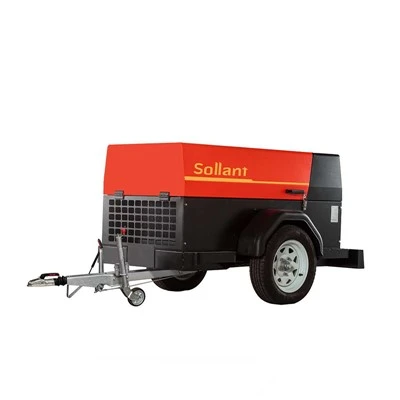
If you're interested in our Stationary Diesel Air Compressor, you can also check out our Sollant Portable Diesel Air Compressor Manufacturer And Supplier for more portable options. And if you prefer electric compressors, we also have Portable Electric Air Compressor available.
If you have any questions about our products or the cooling systems of our compressors, or if you're interested in making a purchase, feel free to reach out to us. We're always happy to help you find the best compressor for your needs.
References
- Compressor Handbook: A Guide to Compressor Technology and Applications
- Diesel Engine Cooling Systems: Principles and Maintenance
So, that's how the cooling system of a stationary diesel air compressor works. I hope this blog has been helpful to you. If you're in the market for a compressor, don't hesitate to contact us for more information and to start the procurement process.