Can a Portable Electric Air Compressor be Used for Creating a Vacuum?
As a supplier of Portable Electric Air Compressors, I often encounter questions from customers about the versatility of our products. One of the most common inquiries is whether a portable electric air compressor can be used for creating a vacuum. In this blog post, I'll delve into this topic, exploring the possibilities, limitations, and practical applications of using a portable electric air compressor to generate a vacuum.
Understanding the Basics of Air Compressors and Vacuums
Before we discuss whether a portable electric air compressor can create a vacuum, it's essential to understand the fundamental principles behind air compressors and vacuums. An air compressor is a device that increases the pressure of air by reducing its volume. It takes in air from the surrounding environment and compresses it into a smaller space, resulting in higher pressure. On the other hand, a vacuum is a space devoid of matter, specifically air. Creating a vacuum involves removing air from a sealed container or space, reducing the pressure inside to below atmospheric pressure.


Can a Portable Electric Air Compressor Create a Vacuum?
The short answer is yes, a portable electric air compressor can be used to create a vacuum, but with some limitations. Most portable electric air compressors are designed primarily for compressing air, not for creating a deep vacuum. However, they can achieve a partial vacuum in certain applications.
To understand how a portable electric air compressor can create a vacuum, we need to look at its operation. When an air compressor is used in reverse, it can draw air out of a sealed container, creating a pressure differential. As the air is removed, the pressure inside the container decreases, approaching a vacuum state. However, the level of vacuum that can be achieved depends on several factors, including the design and specifications of the air compressor.
Factors Affecting Vacuum Creation with a Portable Electric Air Compressor
- Compressor Design: The design of the air compressor plays a crucial role in its ability to create a vacuum. Some air compressors are better suited for vacuum applications than others. For example, compressors with a higher displacement rate can remove air more quickly, potentially achieving a lower pressure. Additionally, the type of compressor, such as a reciprocating or rotary screw compressor, can also impact its vacuum capabilities.
- Sealing: Proper sealing is essential for creating a vacuum. Any leaks in the system can allow air to enter the container, preventing the pressure from dropping to the desired level. When using a portable electric air compressor for vacuum applications, it's important to ensure that all connections and fittings are tightly sealed.
- Vacuum Level Requirements: The level of vacuum required for a particular application also affects whether a portable electric air compressor can be used. For applications that require a deep vacuum, such as in scientific experiments or industrial processes, a dedicated vacuum pump may be necessary. Portable electric air compressors are typically better suited for applications that require a partial vacuum, such as evacuating air from a small container or inflating/deflating air mattresses.
Practical Applications of Using a Portable Electric Air Compressor for Vacuum Creation
- Automotive Applications: In the automotive industry, portable electric air compressors can be used to evacuate air from the air conditioning system before recharging it with refrigerant. This helps to remove moisture and contaminants from the system, ensuring optimal performance.
- Home Use: At home, a portable electric air compressor can be used to create a partial vacuum for various tasks. For example, it can be used to remove air from food storage bags to extend the shelf life of food. It can also be used to inflate and deflate air mattresses, pool toys, and other inflatable items.
- DIY Projects: For DIY enthusiasts, a portable electric air compressor can be a useful tool for creating a vacuum in small projects. For example, it can be used to remove air from a mold before casting resin or to hold objects in place using a vacuum chuck.
Comparing Portable Electric Air Compressors with Other Vacuum Solutions
While portable electric air compressors can be used to create a vacuum, they may not be the best solution for all applications. Here's a comparison of portable electric air compressors with other vacuum solutions:
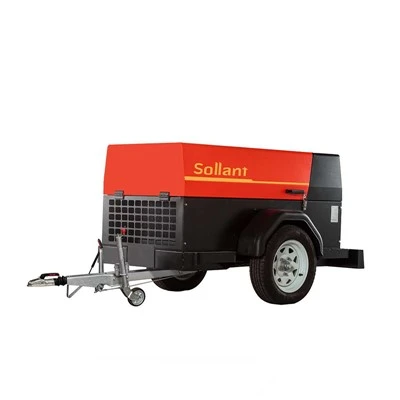
- Portable Diesel Air Compressor: Portable Diesel Air Compressors are typically more powerful than portable electric air compressors and can provide a higher level of vacuum. However, they are also larger, heavier, and more expensive. They are often used in industrial applications where a high volume of air needs to be compressed or evacuated.
- Stationary Electric Air Compressor: Stationary Electric Air Compressors are designed for continuous operation and can provide a more consistent level of vacuum. They are typically larger and more powerful than portable electric air compressors and are commonly used in industrial settings.
- Dedicated Vacuum Pumps: Dedicated vacuum pumps are specifically designed for creating a deep vacuum and can achieve much lower pressures than portable electric air compressors. They are often used in scientific research, semiconductor manufacturing, and other applications that require a high level of vacuum.
Conclusion
In conclusion, a portable electric air compressor can be used to create a partial vacuum in certain applications. While it may not be suitable for achieving a deep vacuum, it can be a cost-effective and versatile solution for many home and small-scale industrial tasks. When considering using a portable electric air compressor for vacuum applications, it's important to understand its limitations and ensure that it meets the requirements of your specific application.
If you're interested in purchasing a Portable Electric Air Compressor for vacuum or other applications, please feel free to contact us. Our team of experts can provide you with more information and help you choose the right compressor for your needs.
References
- ASME. (2019). ASME PTC 9-2019, Performance Test Code on Compressors and Exhausters.
- Compressed Air and Gas Institute. (2020). Compressed Air and Gas Handbook.
- Oberg, E., Jones, F. D., Horton, H. L., & Ryffel, H. H. (2016). Machinery's Handbook: A Reference Book for the Mechanical Engineer, Designer, Manufacturing Engineer, Draftsman, Toolmaker, and Machinist.